For state-owned enterprises, a brand upgrade is rarely a design problem. It is a relationship problem: what the group brand, the business divisions and the product brands are called, how each looks, who may borrow whose credibility, and who must stay separate. Skip that and even a good mark gets edited back by each department.
1. Three constraints specific to SOEs
- Assets cannot be reset: names, marks and reputation built over decades are equity. An upgrade inherits and organizes; it does not start over.
- Long decision chains: brand, party affairs and every business unit must approve, so the proposal has to explain itself.
- Large-scale rollout: from headquarters to local sites, many material types and many suppliers — without a spec, nothing holds.
2. A three-layer structure
- Group layer: carries credibility and policy endorsement; the visual must be steady, formal and reproducible, working from a three-meter facade to an eight-millimeter stamp.
- Division layer: differentiated inside the same parent through color, graphic system and naming, not a second mark.
- Product layer: consumer-facing and allowed to be livelier, but always keeping a visual umbilical cord to the group.
3. The group mark: steady, formal, reproducible
- Legible at eight millimeters, still solid at eight meters;
- Works in one color, reversed and foil-stamped;
- Has explicit proportion and spacing rules when locked up with sub-brand marks.
Missing the third rule is the most common failure: parent and subsidiary marks are set side by side, the lockup is unbalanced, and units quietly use their own versions.
4. Borrowing and separating
The group lends trust; the sub-brand lends flexibility. The manual must define where endorsement is mandatory — tenders, partnerships, government occasions — and where the product brand may stand alone, such as shelf and social content.
5. Rollout is the real cost
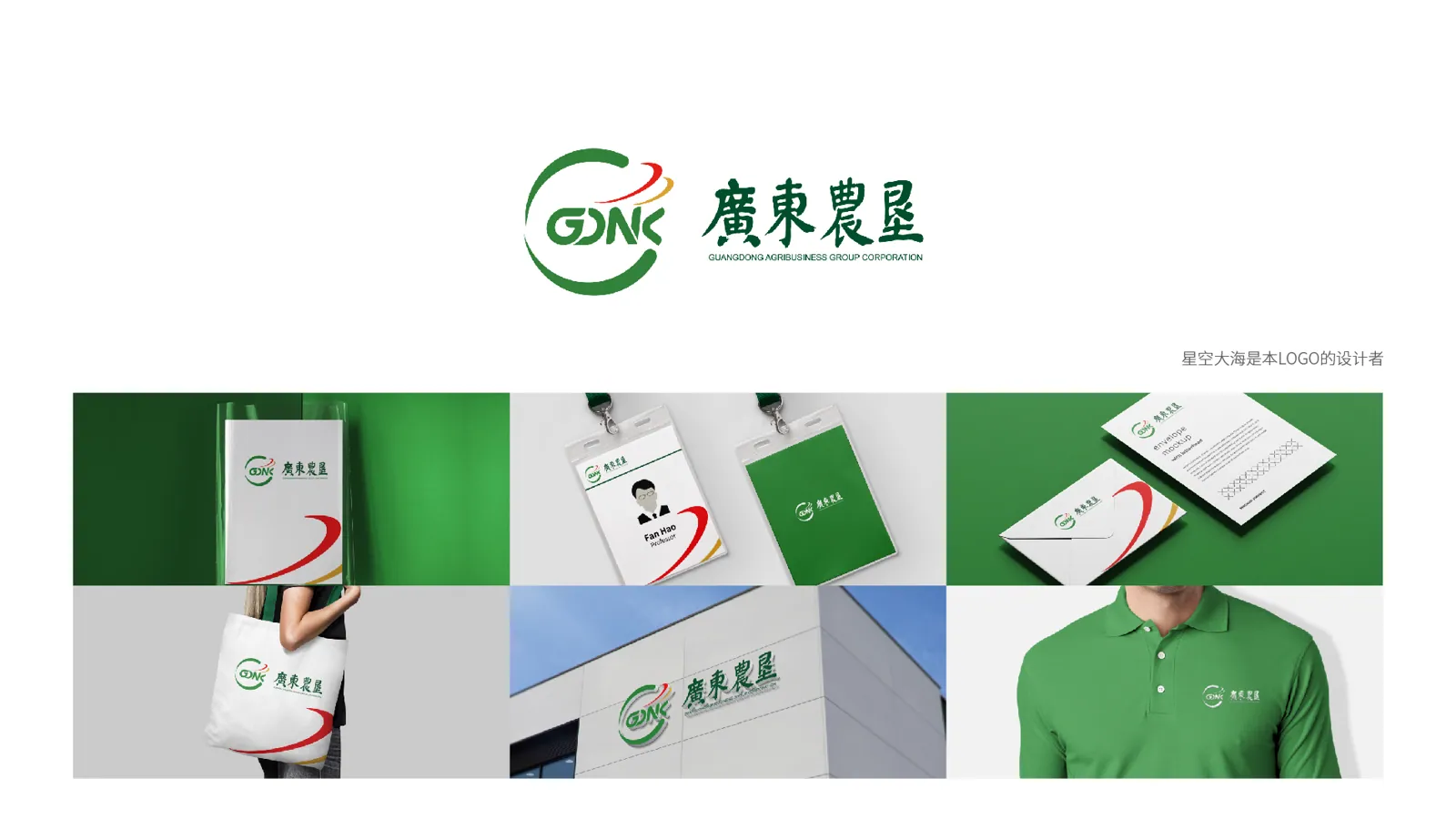
Group identity lives or dies in the supply chain. The spec needs material samples, process parameters and an acceptance checklist, otherwise the same facade turns five different greens across five provinces. Projects such as the Guangdong Agribusiness Group VI design cover office stationery, workwear, vehicles, facades, packaging and exhibition items — each ready to send straight to production.
6. Four ways to judge success
- Staff can explain it in one sentence;
- Materials replicate themselves without calling the agency each time;
- Sub-brands actually borrow credibility in the market;
- Unit cost falls after standardization rather than rising.
The outcome is not a thick manual. It is an order that local teams can execute and suppliers can reproduce. See the VI design page for the full deliverable set.
Consolidating a group identity? We begin with brand architecture, settling the parent and sub-brand relationship before any visual work.
Start a project · About us · +86 400-6619-020